
Opera by Giuseppe Verdi
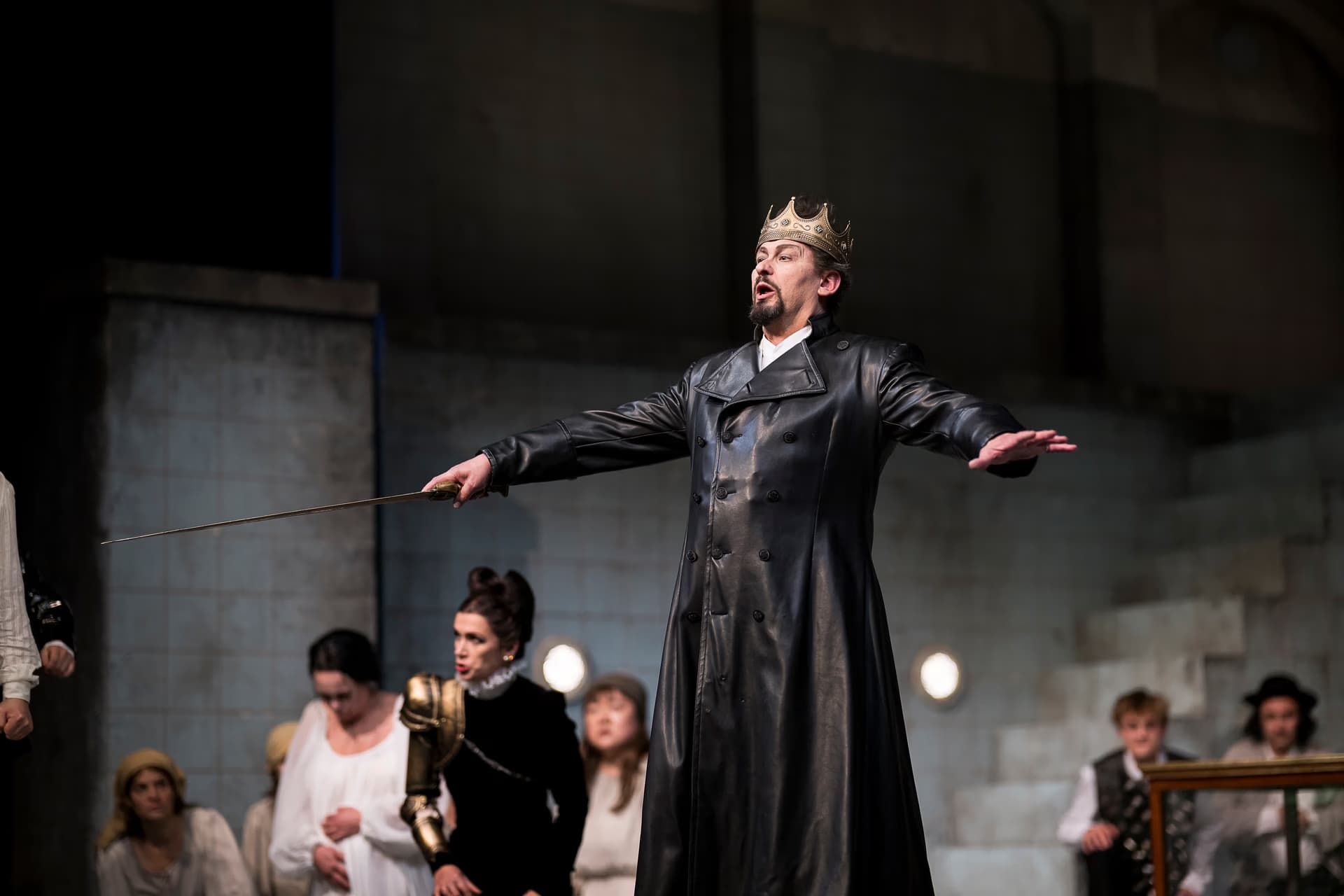
Nabucco is a drama about power, love, religion, and freedom, based on the Old Testament story of the destruction of the first Jewish temple in 586 BC: Nabucco, King of Babylon, has conquered Jerusalem. In his delusion, he has the Jewish people taken into Babylonian exile and declares himself a god. For this, he is punished with madness: no longer master of his own senses, he is deposed by his daughter Abigail. Only when he acknowledges the God of the Hebrews does Nabucco find his way back to life and manage to save his younger daughter Fenena, who is to be sacrificed by her sister Abigail to the Babylonian god Baal. He promises the Jews he will build a new temple in Jerusalem to honor their God.
Premiered in Milan in 1842, Nabucco marked the international breakthrough for Giuseppe Verdi. In the years leading up to the creation of this first masterpiece, he had endured a difficult time: in quick succession, both his children and his wife had passed away. His career as an opera composer was also stagnating. Discouraged by failure and personal tragedies, Verdi had at times considered quitting composing altogether. It was only when he read Temistocle Solera's libretto for Nabucco that he found new hope. Inspired by the lines of the famous Chorus of the Hebrew Slaves, Verdi's first sensational success was born. To this day, this chorus remains a poignant example of the humanitarian concerns of its creator, who was also politically active throughout his life.
This is a continuous multi-day event