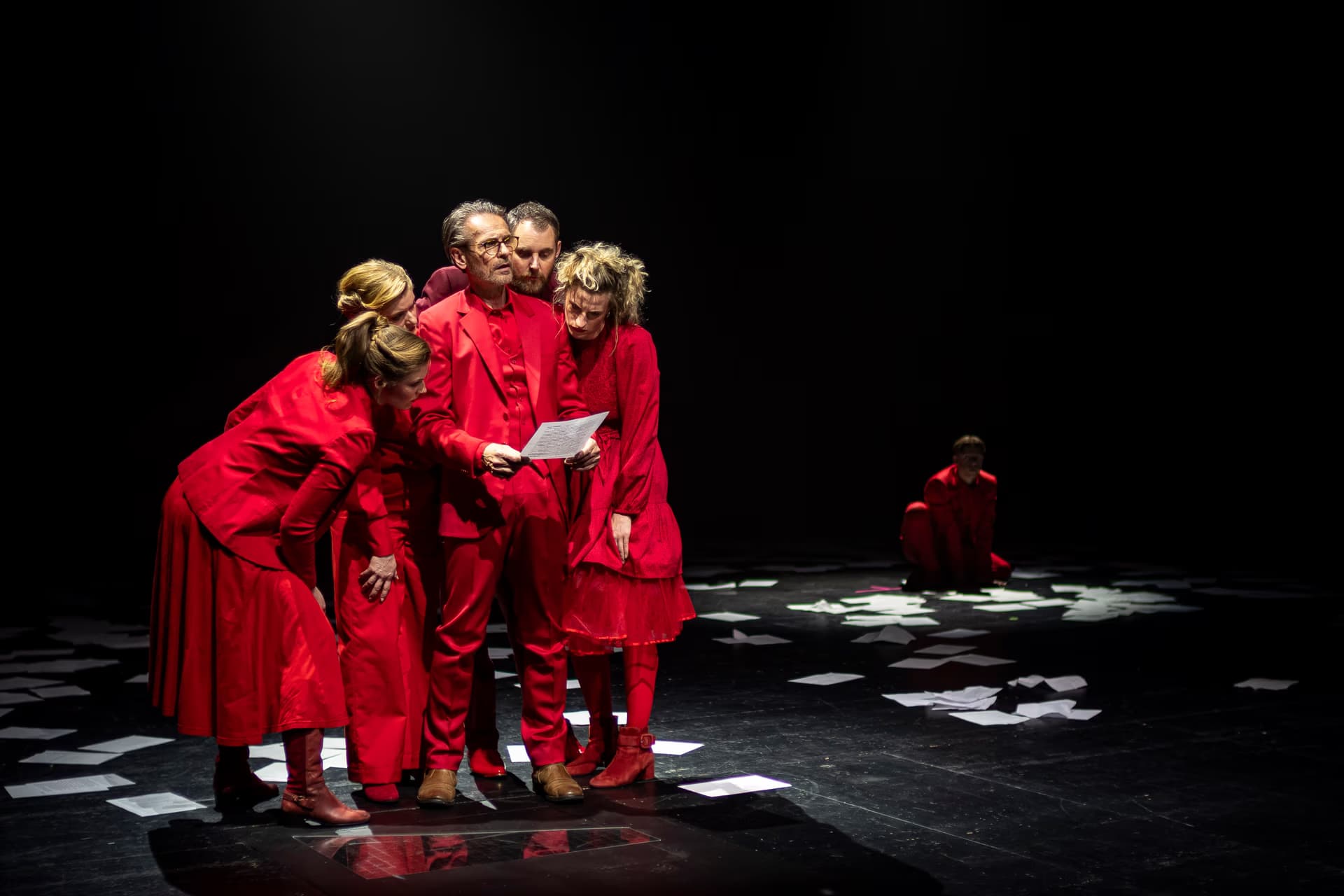

Biographical by Stefan Wolfram
Deutsch-Sorbisches Volkstheater Bautzen
30 minutes before the start Introduction
Franz Kafka (1883-1924) remained a bachelor all his life. He considered marriage and having children to be the highest thing a man could achieve: "Marriage, starting a family, accepting all the children that come, keeping them in this uncertain world and even leading them a little, is, I am convinced, the utmost that a man can achieve." (Letter to his father)
Nevertheless, despite three engagements, it was not possible for him to enter into a lasting relationship with a woman. One important reason for this failure was certainly his relationship with his parents. The lack of affection and attention in his childhood and youth led to a fear of (physical) closeness over the course of his life: "Coitus as a punishment for the happiness of being together." (Diary of 14 August 1913). Kafka, who was always oppressed by the feeling that he was not living according to his wishes, had a panic-stricken fear of losing the last remnants of freedom, which he retained above all in his writing, through a lasting relationship. He was able to create closeness through letters. This resulted in the most beautiful love letters in world literature.
His relationships with Felice Bauer and Milena Jesenská were mainly conducted by letter. Only shortly before his death did he attempt to break out of this vicious circle: for a few months he lived in Berlin with Dora Diamant, who also devotedly cared for the seriously ill man.
After thoroughly researching biographical documents and incorporating Franz Kafka's literary works, author and director Stefan Wolfram created a theatre evening about the undiminished fascinating poet and man, whose traces can still be found on every corner in his beloved Prague.